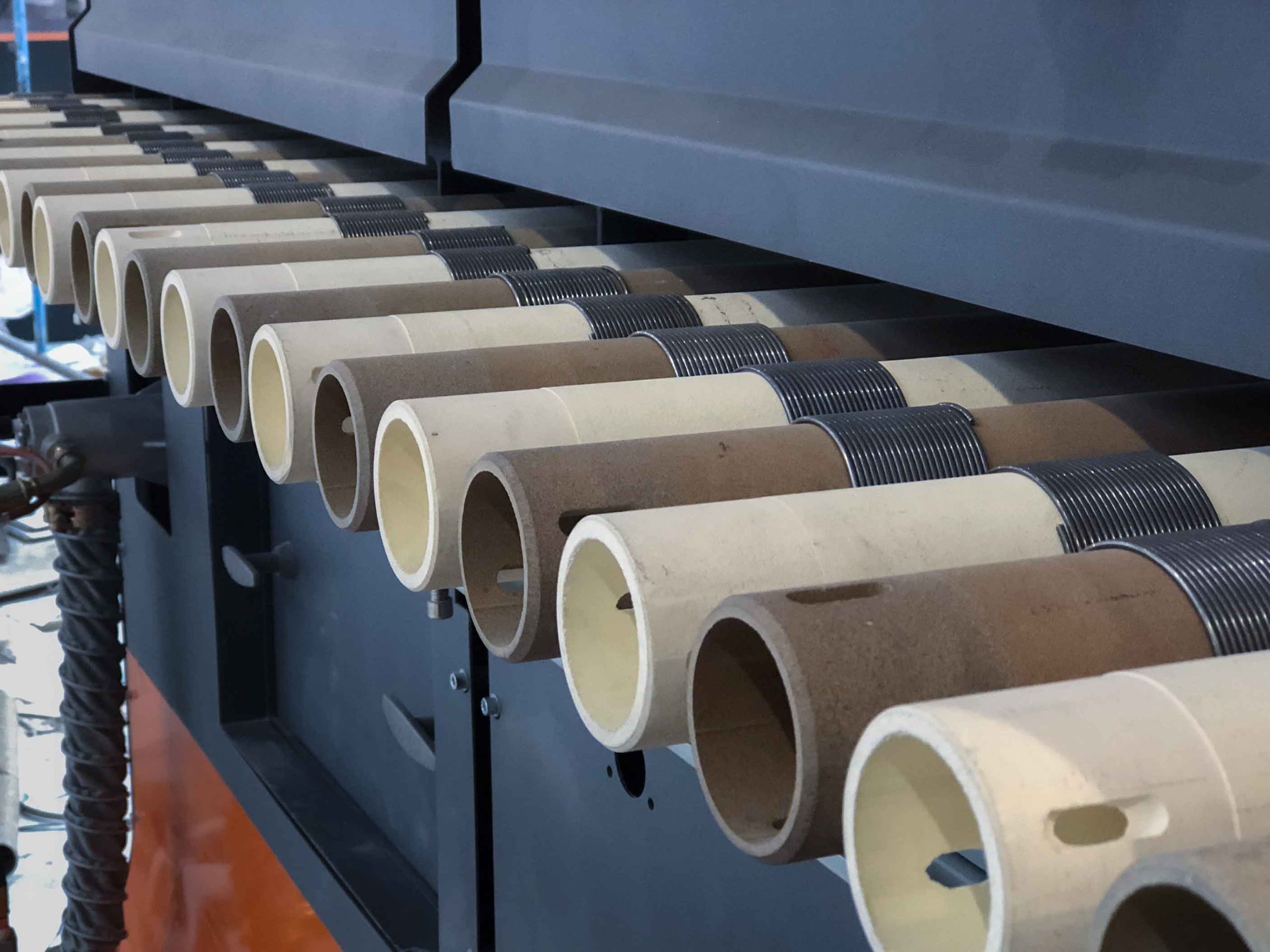
Choosing the right ceramic roller is one of the most cost-sensitive decisions in roller kiln operation. The wrong grade in the wrong temperature zone leads to bending, breakage, tile defects, and unplanned downtime — all of which cost far more than the rollers themselves.
This guide explains how ceramic rollers are actually selected in practice: what information matters most, how to match grades to kiln zones, and one important misconception that costs many factories money. It is written for production managers, kiln engineers, and procurement teams sourcing rollers for ceramic tile, slab, tableware, and similar roller kiln applications.
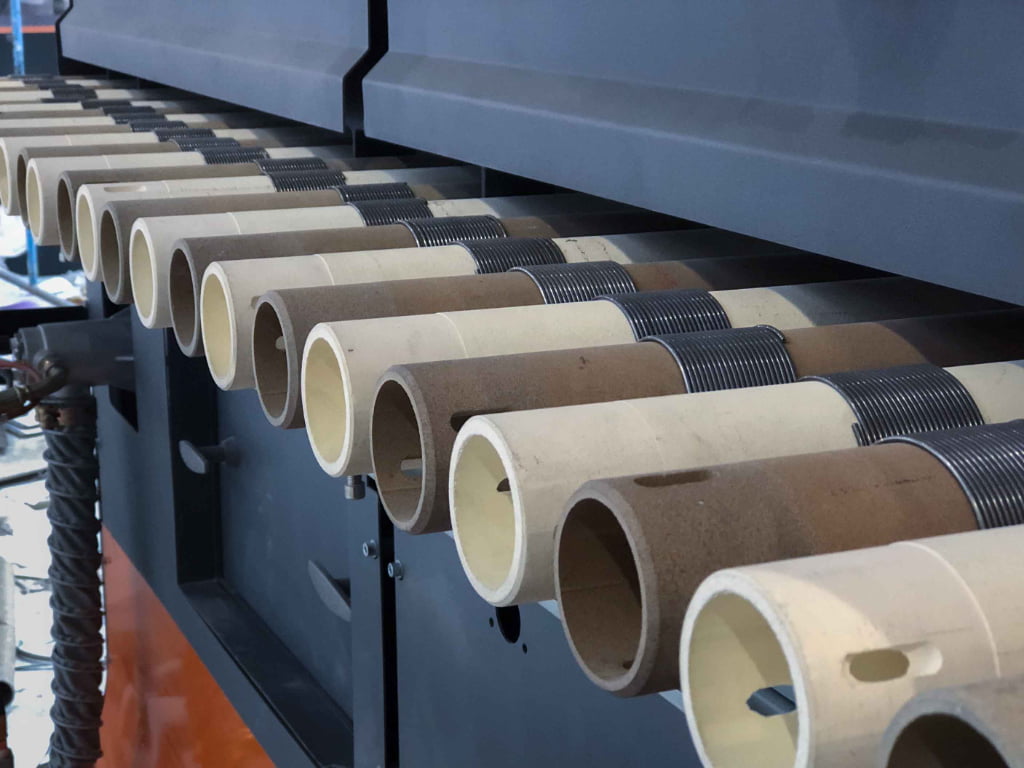
When a factory asks us to recommend a roller, most of the selection comes down to two questions:
1. What is the maximum temperature in the firing zone?
This is the single most important number. A roller that performs perfectly in a 1200°C zone may deform or fail in a 1350°C zone. Knowing the peak temperature your rollers must survive immediately narrows the choice of suitable grades.
2. What product are you firing?
Standard wall and floor tiles, large-format slabs, sintered stone, tableware, and sanitaryware each place different demands on rollers. A heavy porcelain slab needs rollers with much higher bending strength than a thin standard tile. The product determines the mechanical load the roller carries across its span.
Almost everything else in roller selection builds on these two answers. If you can provide them, an experienced supplier can already recommend a suitable grade. The remaining details — dimensions, load width, cycle time — refine the choice and confirm the mechanical calculations.
Understanding rollers by kiln zone
A roller kiln is not a single temperature environment. It moves product through distinct zones — preheating, firing, rapid cooling, and slow cooling — and each zone has different requirements. Understanding this is the key to correct selection.
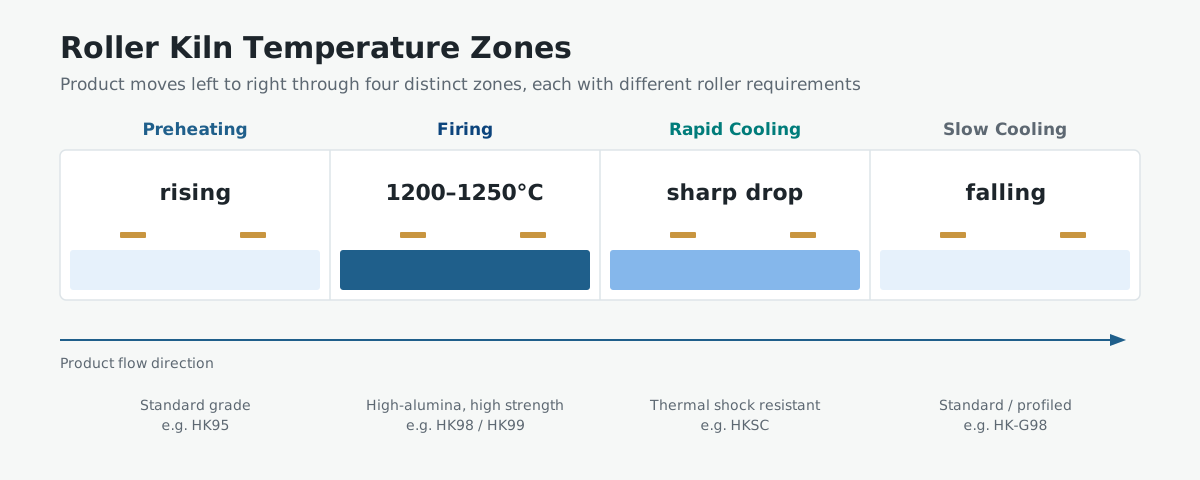
Here is how a typical high-alumina roller series maps to those zones:
| Zone |
Conditions |
Typical roller requirement |
| Preheating |
Rising temperature, moderate load |
Standard grade, good value |
| Firing (high-temperature) |
Peak temperature, sustained load |
High-alumina, high bending strength |
| Rapid cooling |
Sudden temperature drop, thermal shock |
Excellent thermal shock resistance |
| Slow cooling / exit |
Falling temperature, tile guidance |
Standard grade, sometimes profiled rollers |
Most factories do not use a single roller grade throughout the kiln. They match grades to zones — a higher-grade roller where temperature and load peak, a more economical grade where conditions are milder. This is the most cost-effective approach, because you are not paying for ultra-high-temperature performance in a zone that does not need it.
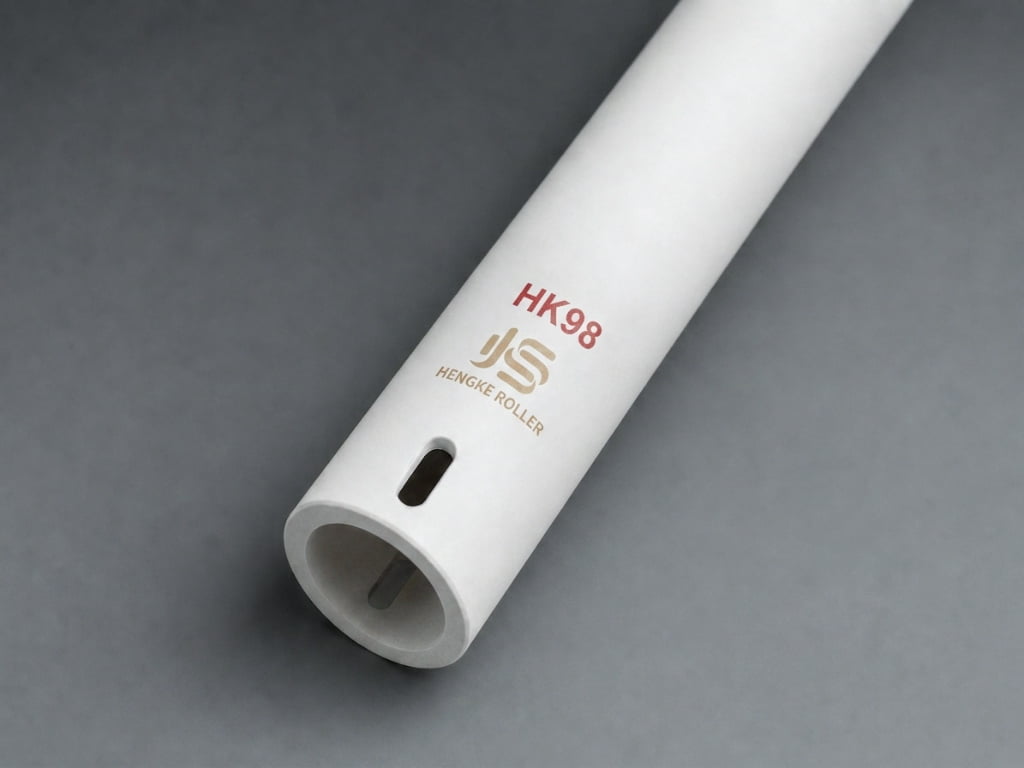
For reference, here is how the Hengke roller series is positioned across these zones (figures below reflect current published specifications):
| Model |
Al₂O₃ |
Max Operating Temp |
Bulk Density |
Bending Strength (at 1350°C) |
Best suited for |
| HK95 |
75–76% |
1300°C |
2.5–2.7 g/cm³ |
≥46 MPa |
Standard tile lines, lower-temperature zones |
| HK98 |
76–77% |
1350°C |
2.6–2.8 g/cm³ |
≥50 MPa |
The all-round workhorse — usable across most zones |
| HK99 |
77–78% |
1400°C |
2.7–2.9 g/cm³ |
≥55 MPa |
High-temperature firing zones |
| HK99-Pro |
79–81% |
1450°C |
2.9–3.1 g/cm³ |
≥69 MPa |
Heavy loads — large slabs, demanding firing zones |
| HK-G98 |
76–77% |
1350°C |
2.6–2.8 g/cm³ |
≥48 MPa |
Cooling zones — gear surface improves tile movement |
| HKSC (SiC composite) |
— |
1100°C |
2.4–2.5 g/cm³ |
≥46 MPa (at 1100°C) |
Rapid-cooling zone |
| HK-Vector |
76–77% |
1350°C |
2.6–2.8 g/cm³ |
≥50 MPa |
Tile movement correction (non-uniform diameter) |
Note that bending strength above is measured at 1350°C (or 1100°C for HKSC) — a high-temperature test point close to each grade's rated maximum — rather than at room temperature. This is a more demanding and more relevant figure for kiln operators, since it reflects strength under conditions closer to actual firing.
Rated temperature vs. working temperature: read the spec sheet correctly
Before going further, there is an important distinction that catches many buyers out.
The maximum temperature listed for a roller grade is usually its
rated temperature under no load — the highest temperature the material can withstand when nothing is pressing down on it. It is a measure of the material's capability, not a recommendation for your working temperature.
In a real kiln, rollers carry load: tiles press down on them continuously across their span. Under load, a roller must operate well below its no-load rating to avoid sagging and deformation over time. The gap between the two is your safety margin.
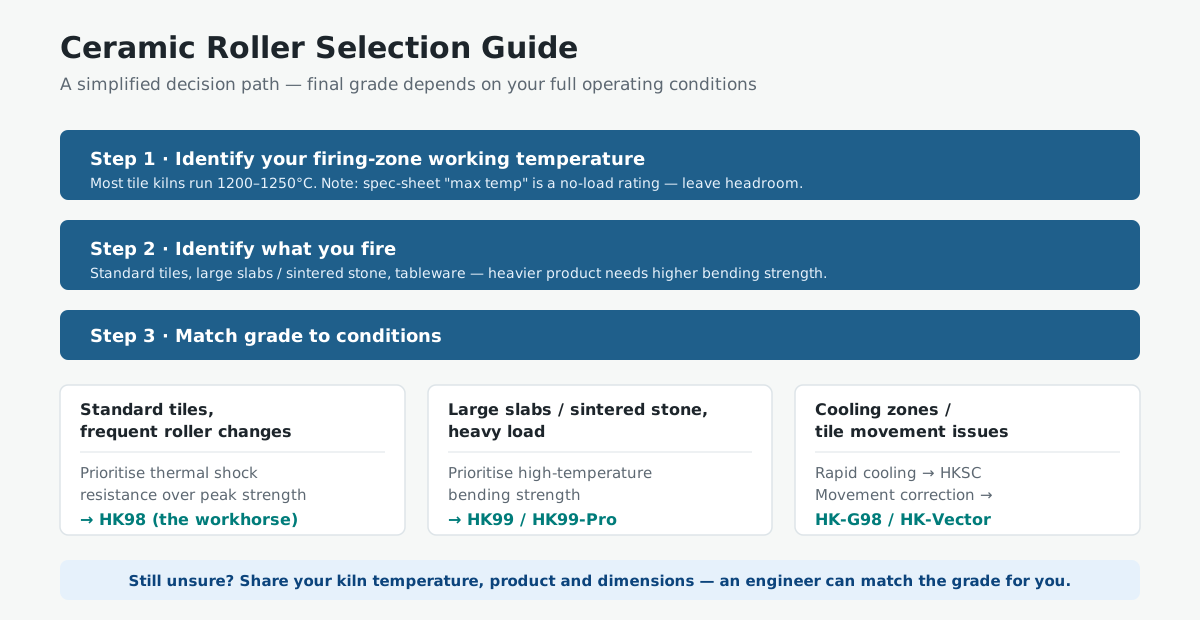
In practice, this is why a roller rated at 1350°C is used in firing zones running at 1200–1250°C, not at 1350°C. Most ceramic factories operate their high-temperature zone in the
1200–1250°C range. Temperatures above 1250°C are uncommon. Some lines run lower still, around 1150°C, when firing lower-grade tiles (for markets that do not demand top quality) or roof tiles and similar products.
So when you compare spec sheets, do not select a roller by matching your working temperature directly to its rated maximum. You need headroom between the two. An experienced supplier will factor this margin into the recommendation automatically — another reason to share your actual working temperature rather than choosing a grade yourself from the numbers alone.
The misconception that costs factories money
Here is something many buyers get wrong, and it is worth stating plainly:
higher maximum temperature and higher bending strength do not automatically mean a "better" roller for your line.
Consider a real example. Suppose your firing zone runs at 1250°C. Three grades can technically handle that temperature: HK98, HK99, and HK99-Pro. It is tempting to choose the highest grade "to be safe." But that is often the wrong call.
The reason is that these grades are optimised for different things:
- HK99 and HK99-Pro offer higher bending strength at high temperature. This matters when you are firing heavy products — large slabs, sintered stone — where the roller must resist sagging under sustained load.
- HK98 offers better resistance to rapid heating and cooling (thermal shock). This matters when rollers are inserted and removed frequently, because each insertion and extraction subjects the roller to sharp temperature change.
So if your line involves frequent roller changes, and you are firing standard tiles rather than heavy slabs,
HK98 is often the better choice — even though HK99 has a higher maximum temperature rating. Choosing the higher grade in this situation means paying more for high-temperature bending strength you do not need, while getting worse thermal shock performance than you would have had with HK98.
This is why HK98 remains the most widely used grade across the industry. For a large share of standard tile production, it offers the best balance of temperature capability, strength, thermal shock resistance, and cost across all four kiln zones.
The lesson: roller selection is about matching the grade to your actual operating conditions, not buying the highest number on the spec sheet.
Most ceramic materials lose strength as temperature rises. HK99 is formulated with a controlled zirconia addition dispersed through the high-alumina body — a zirconia-toughened alumina (ZTA) approach — which is designed to offset some of that strength loss at elevated temperature.
In simple terms, zirconia particles distributed through the alumina matrix interact with cracks as they begin to form under stress, absorbing energy that would otherwise let the crack propagate further. This toughening effect helps HK99 maintain a smaller strength drop between room temperature and its rated operating range than a plain high-alumina roller of similar composition would show.
The practical takeaway is that headline bending-strength figures on a spec sheet are usually measured at a single high-temperature test point close to the grade's rated maximum — a demanding and realistic figure, but not the whole picture. If your kiln's actual working temperature is meaningfully below that test point, ask your supplier for strength data closer to your real operating temperature; for a well-formulated grade like HK99, performance at a moderate working temperature can be a more favourable number than the published high-temperature figure suggests.
A note on "hot replacement" claims
If a supplier promises that their rollers can be hot-swapped — inserted into a hot kiln without cooling it down — and will never break in the process, treat that claim with caution.
The honest reality is that no manufacturer can guarantee a roller will survive hot insertion every time. It is a matter of probability, not certainty. Under identical test conditions, a poorer roller might break several out of ten on hot insertion, while a better roller breaks fewer — but no responsible supplier will claim zero.
It is also worth understanding what "hot replacement" actually means in practice. Rollers are rarely inserted straight from room temperature into a 1200°C zone. More often, a roller is moved from a lower-temperature zone into a higher one, so it is already partially heated. Even a new roller is typically dried and pre-warmed beside the kiln before insertion, never pushed cold into the firing zone.
For most situations, the responsible recommendation is to reduce the kiln temperature before changing rollers. What a good roller offers is a
lower probability of breakage under thermal stress and correct guidance on safe replacement — not an unrealistic promise of risk-free hot swapping.
A supplier who explains this honestly is giving you better information than one who sells you a guarantee that cannot be kept.
Why dimensions matter as much as grade
Selecting the right material grade is only half of roller selection. The roller's dimensions — and how it sits in your kiln — determine the mechanical stress it experiences.
Three measurements are especially important:
- Distance between roller supports — how far the roller spans between the kiln walls that support it
- Load width — the effective width over which tiles press down on the roller
- Distance between rollers (axis to axis) — the spacing that determines how product is carried
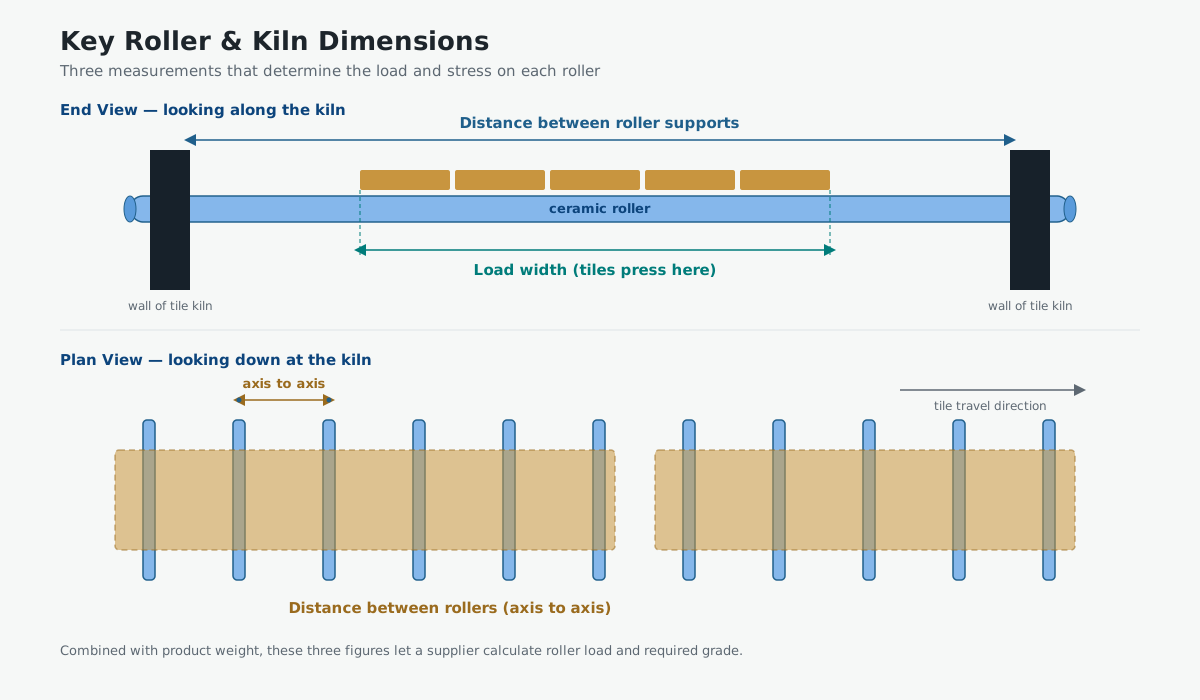
These figures, combined with the weight of the product being fired, allow a supplier to calculate the load and stress on each individual roller. A roller that is mechanically under-specified for its span and load will sag or break, regardless of how good the material is.
This is why a careful supplier will ask for these dimensions, and why a technical questionnaire is part of a serious quotation process. If you are unsure of these measurements, your kiln manager or maintenance supervisor will have them — they are standard kiln specifications.
How to request a recommendation and quotation
In practice, the fastest way to get an accurate roller recommendation is to provide:
- The grade and dimensions you currently use (including the manufacturer's model, if known)
- Your firing zone peak temperature
- The product you fire (tile type, size, thickness, weight)
- Your annual roller consumption (helps with quoting and supply planning)
- Any problems you currently experience — bending, breakage, surface colour change, frequent cleaning
With this information, an experienced supplier can match your existing rollers to an equivalent grade, recommend the right grade for each kiln zone, and provide a quotation — often offering two grade options at different price points so you can balance cost against performance for your specific line.
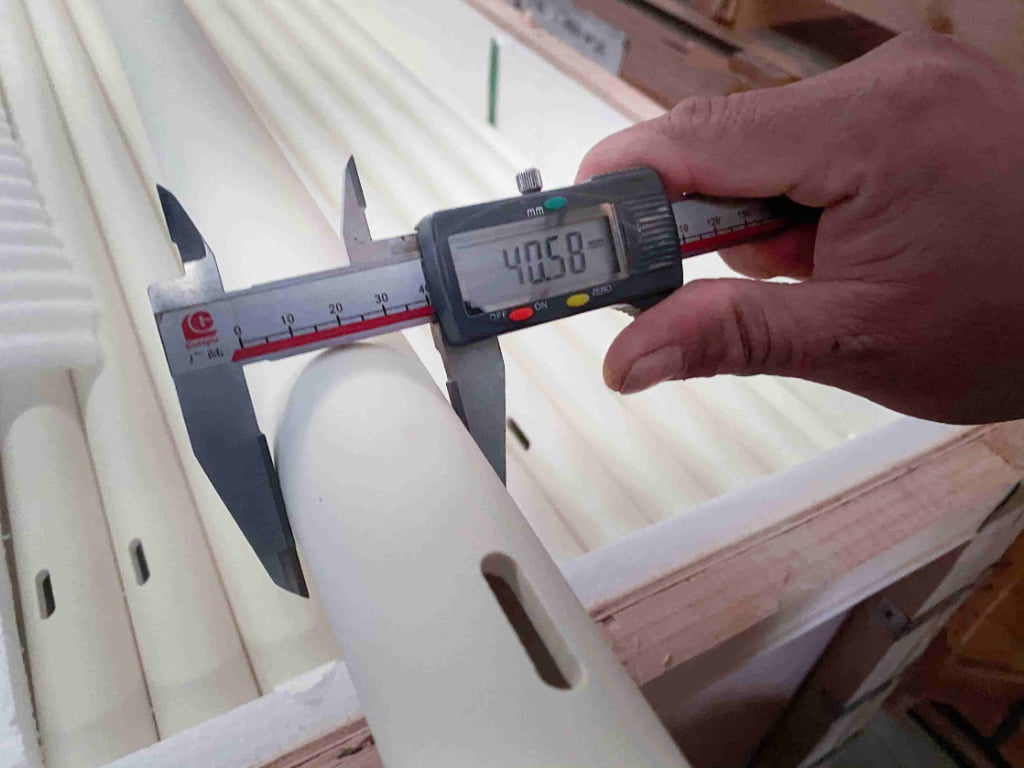
The goal is a roller that fits your real operating conditions: the right material for your temperature and product, the right dimensions for your kiln, and honest guidance on how to run and replace it.
Hengke Ceramic manufactures ceramic rollers for roller kilns across tile, slab, tableware, and related industries, with technical support for grade selection, dimensional matching, and application review. If you would like a roller recommendation for your kiln, share your operating conditions and our engineers will respond within 24 hours.